1275K
A permanent generative media installation in the lobby of 1275K in Washington DC, running continuously since 2022. Nine audiovisual artworks rotate on a 1536 × 1750 portrait LED wall with camera-tracked interaction and realtime generative audio, managed by a self-recovering control system.
- Year
- 2022
- Role
- Generative art, system design and development
- Location
- Washington DC, USA
- Tools
- Realtime Graphics, Generative Systems, Computer Vision, TouchDesigner, SuperCollider
Updated 4 October 2026
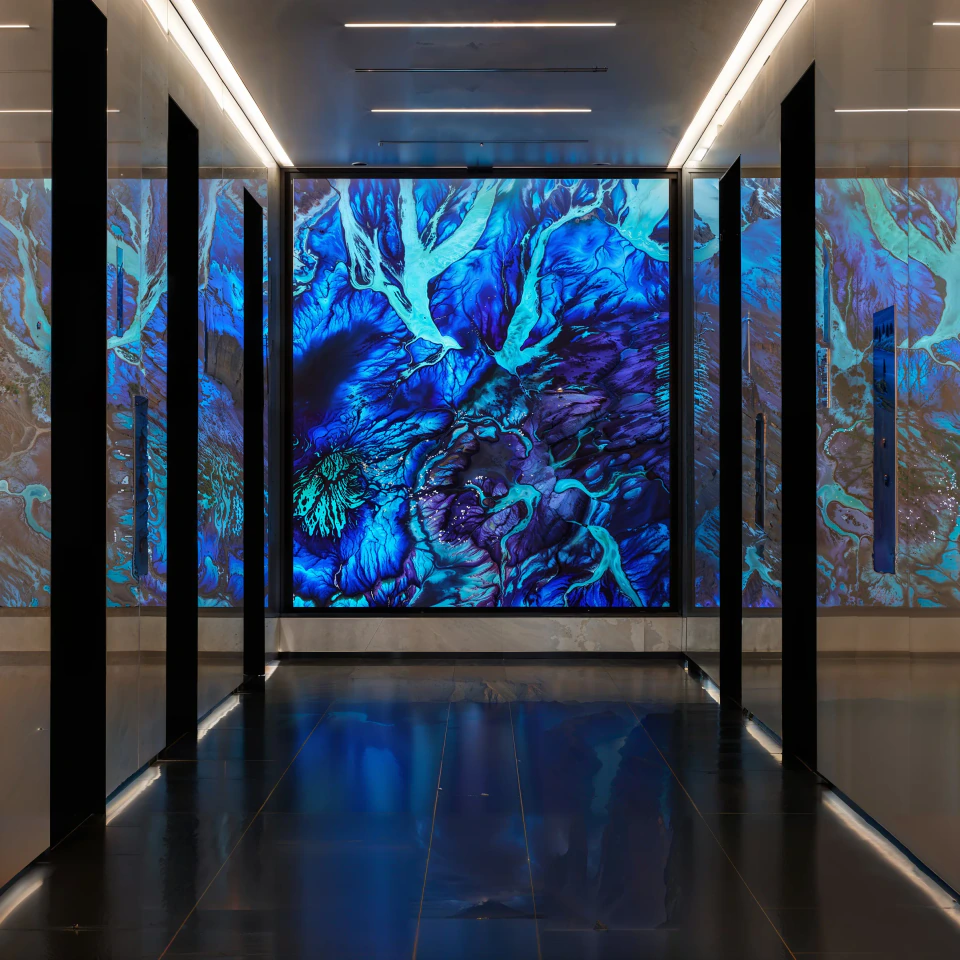
1275K is a permanent generative media installation in the lobby of the 1275K building in Washington DC, running continuously since 2022. A single TouchDesigner system plays nine audiovisual artworks on a portrait LED wall (1536 × 1750), switching between them autonomously on a daily rhythm, generating its own soundtrack in realtime, and keeping itself alive with a self-recovering control layer.
The work is not a playlist of rendered videos but a set of living systems. Each artwork is a self-contained generative scene — the GPU renders exactly one at a time at full frame rate, while the others park at zero cost. There is no pre-rendered content; everything on the wall is computed live.
The artworks
Nine generative works rotate on the wall, including a composite night state the system enters at dusk:
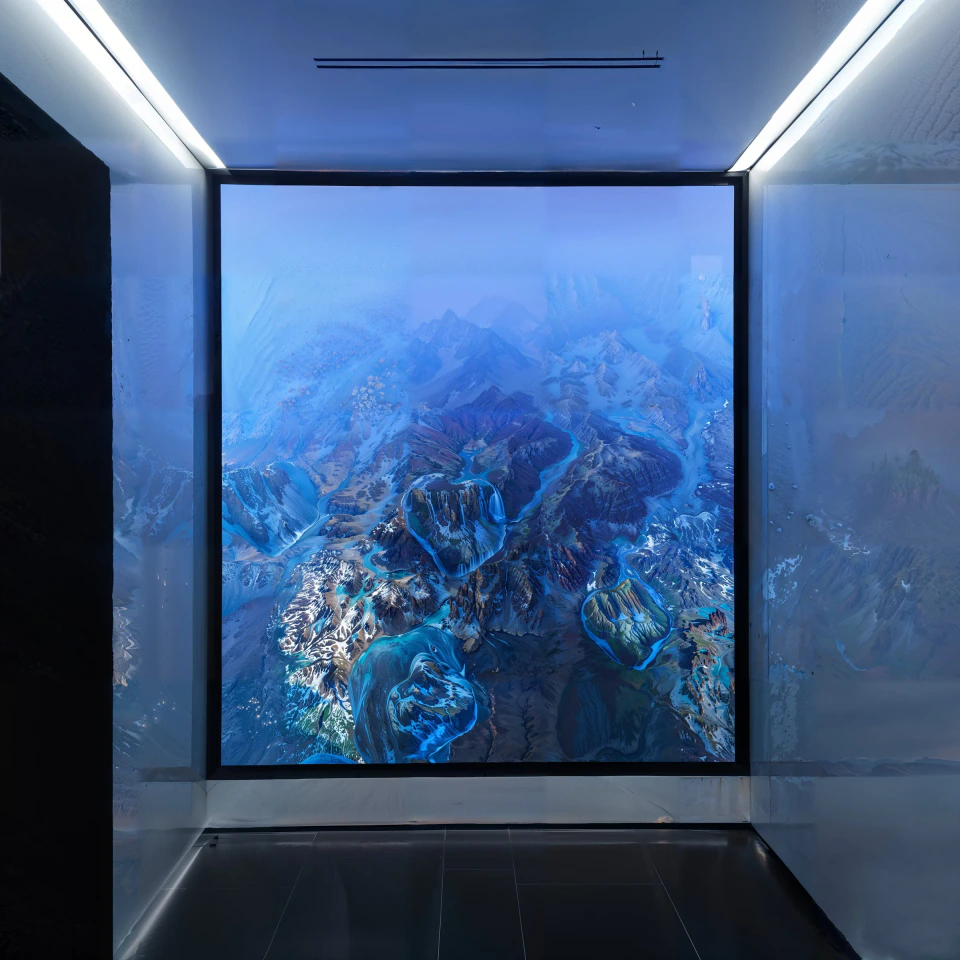
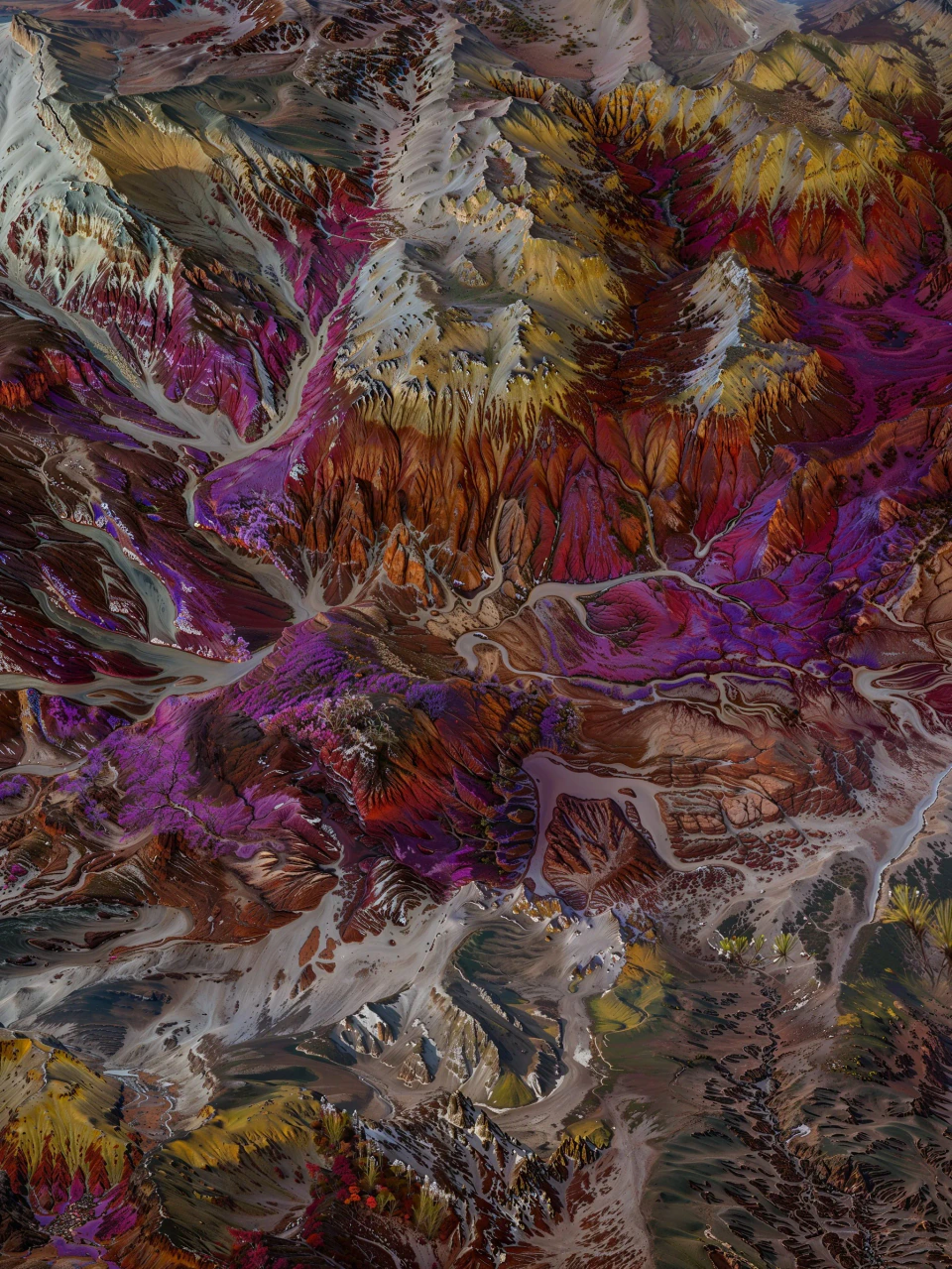
- Scape — generative terrain: mountainous landscapes that are constantly regenerated, presenting new geology as the system evolves.
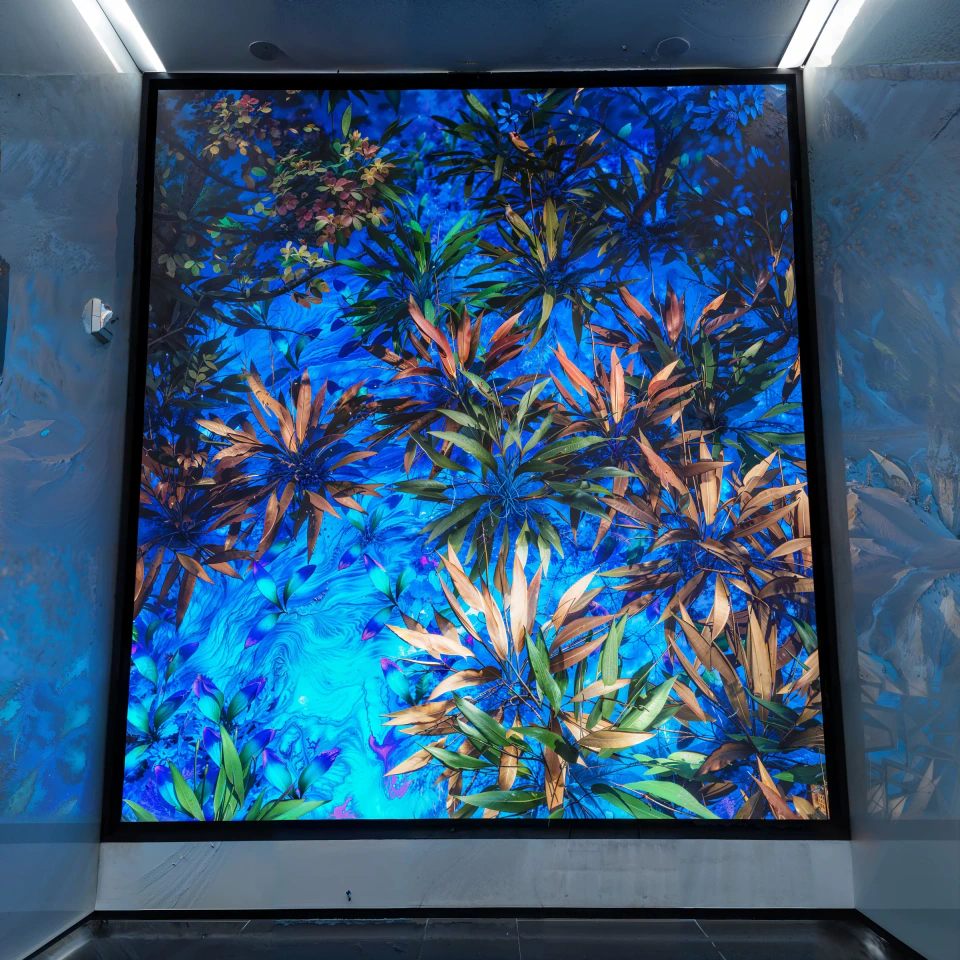
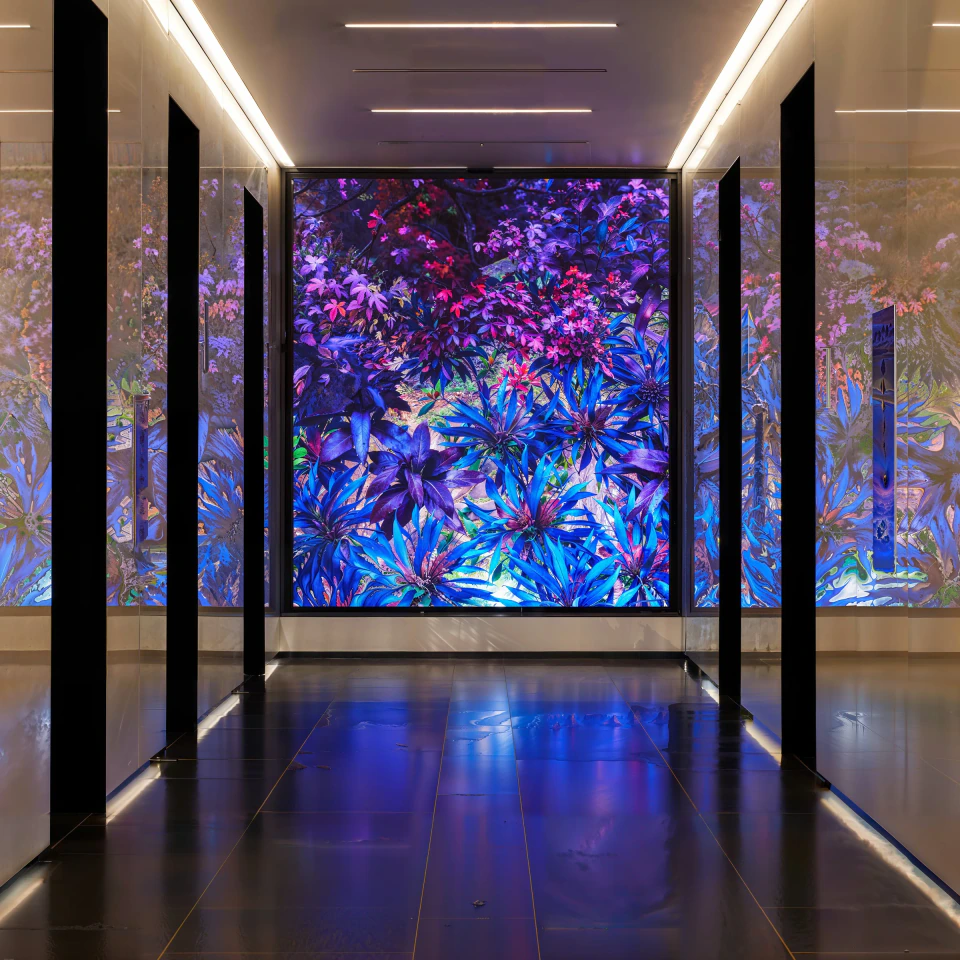
- Third Nature — a virtual forest garden of digitally rendered plants that sway gently, simulating a natural setting within the lobby.
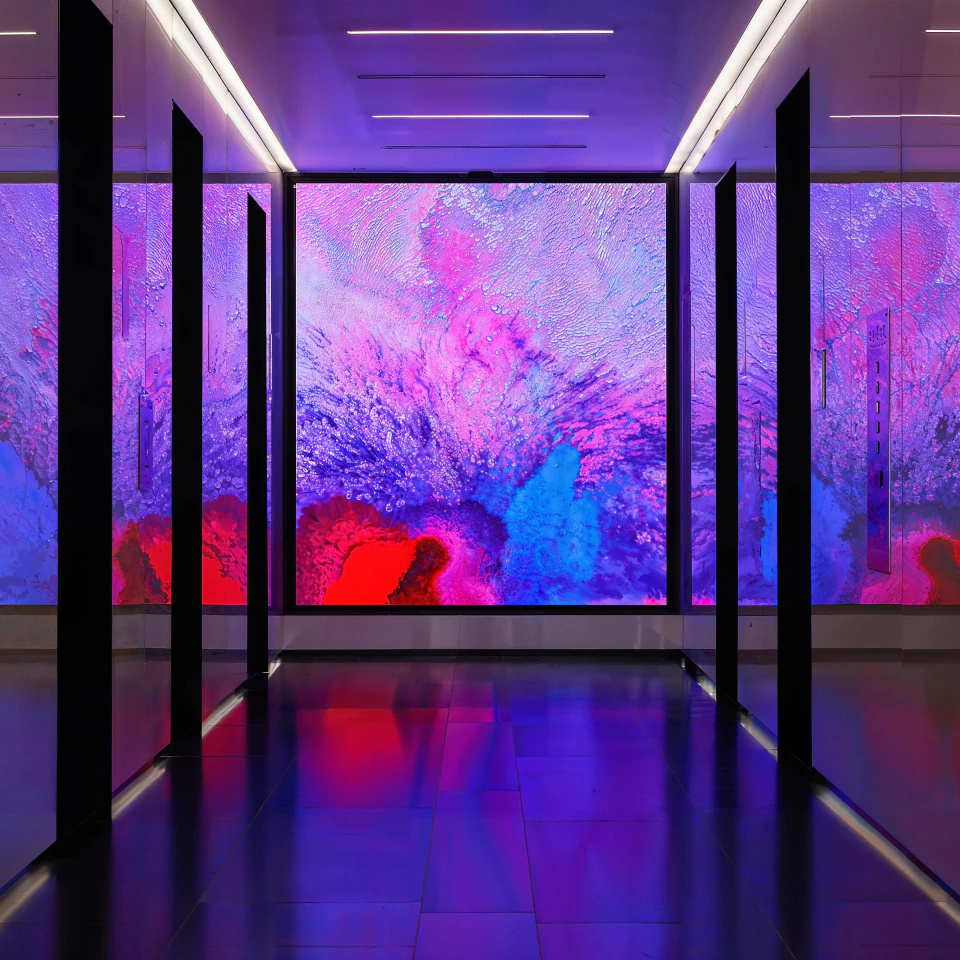
- Emergence — the interactive piece: a camera detects people in the lobby and portrays them as digital brushes that emit multicolored particles, turning visitors into co-authors of the composition.
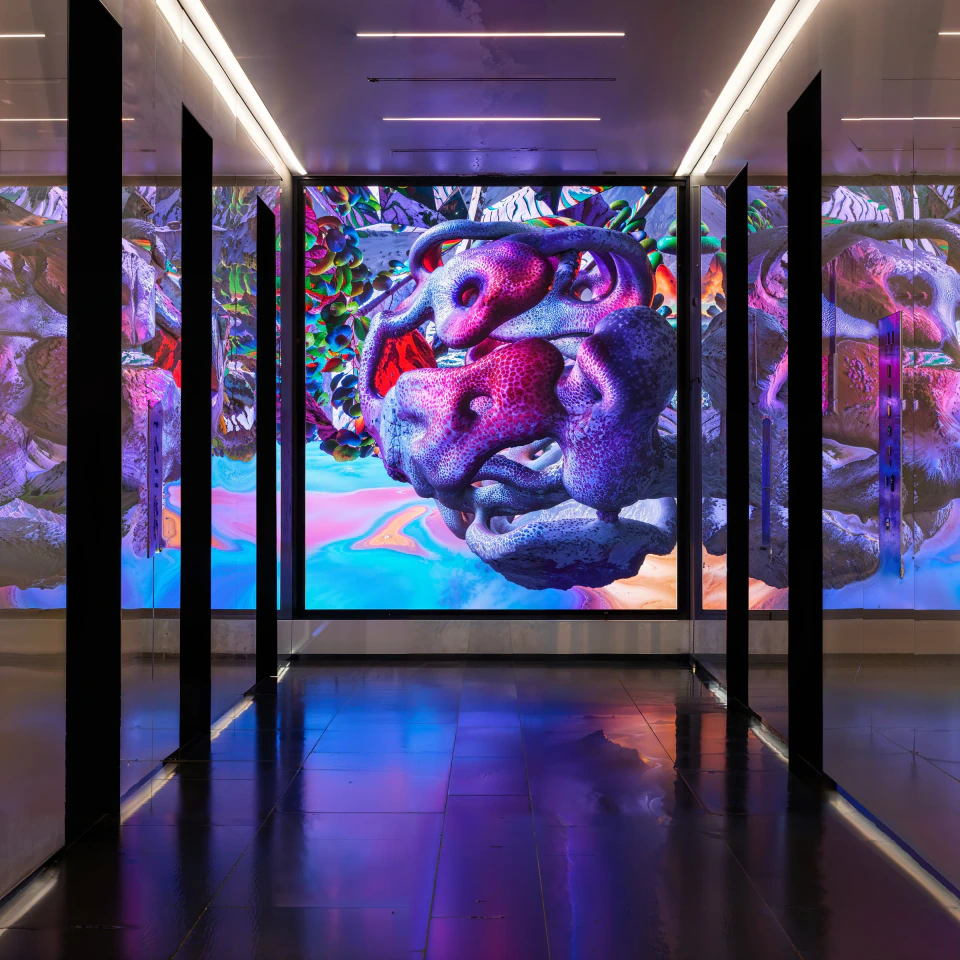
- Hypertecture — an ongoing digital construction of virtual architecture: abstract sculptures forming within a constantly changing environment.
- Physarum — a slime-mold agent simulation: thousands of agents deposit and follow trails, growing electric filament rosettes out of the black.
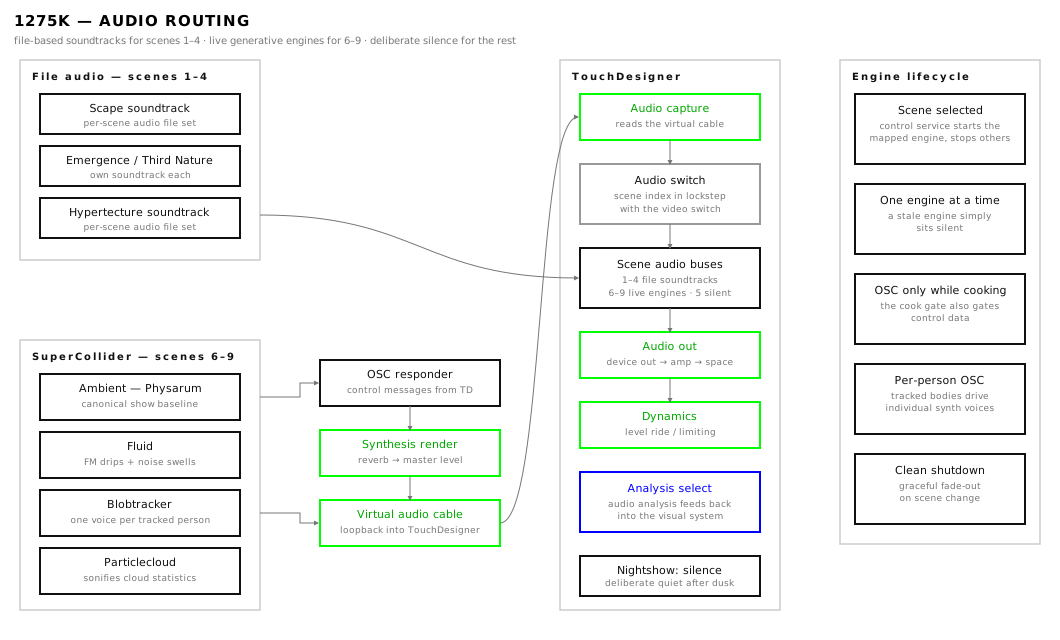
- Blobtracker — the room becomes the input: tracked bodies push through the composition, and each tracked person gets a voice in the soundtrack — height maps to pitch, position to pan, size to tone.
- Fluid, Particlecloud, Nightshow — curl-noise fluid dynamics, flocking particle fields, and the composite night state.
Autonomy and control
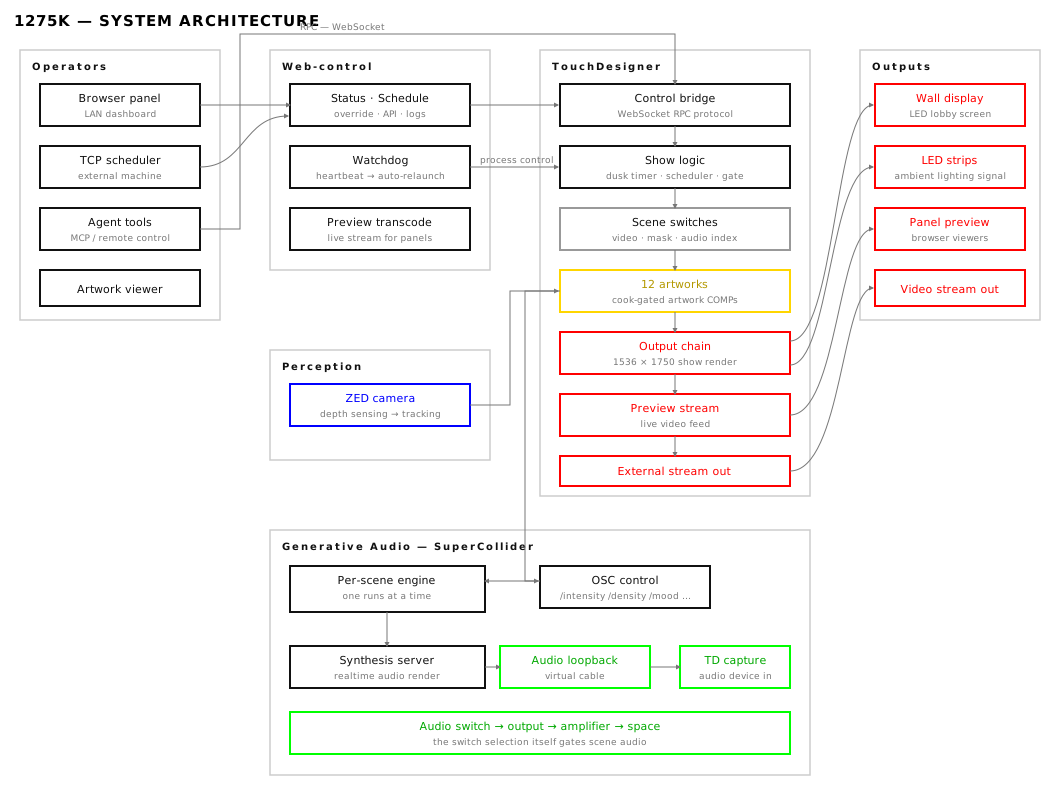
The installation is designed to run unattended. A scheduling layer selects artworks on a weekly rhythm and moves to a night state at dusk. A watchdog monitors the render process with a heartbeat — if the show crashes, it is relaunched automatically and the previous scene is restored. A web-based control panel allows manual override from any device on the network, with an interlock so two operators can never conflict.
The entire system is built around a single principle: state, not code. The active artwork is one value; any component — the scheduler, the panel, the dusk timer — can write it, and the wall state is always readable. This makes the system transparent, recoverable, and extensible: new artworks can be added without touching the switching logic.
System Diagrams
Images